
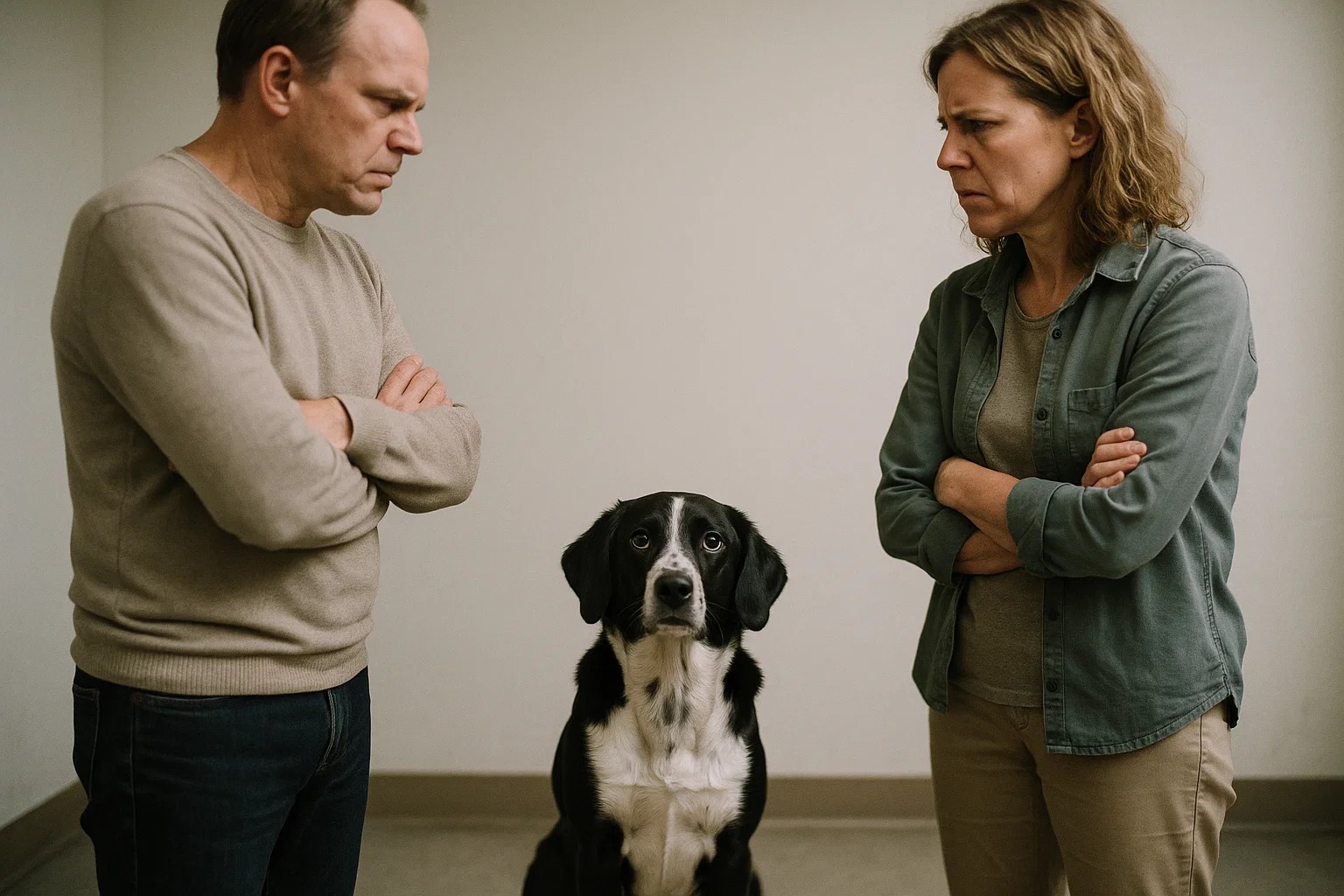

When relationships break down, the question of who keeps the family pet can become one of the most emotionally charged aspects of divorce proceedings.
With 60% of UK households now owning a pet, understanding how the law treats our beloved companions during separation has never been more important.
Legal Status of Pets in UK Divorce
Under current English law, pets are classified as chattels, which are essentially personal property akin to furniture or vehicles. This means that during divorce proceedings, courts determine ownership through property adjustment orders instead of considering the emotional bonds between pets and family members.
While this legal framework may seem harsh to devoted pet owners, it reflects the traditional view that animals are possessions to be divided alongside other marital assets. The court’s primary concern when determining pet ownership typically revolves around practical factors such as who purchased the animal, who has been the primary carer, and who has the financial capacity to continue providing proper care. However, this clinical approach is beginning to evolve as society’s relationship with pets continues to change.
Recent Court Cases & Shifting Attitudes
A landmark case decided in December 2024, FI v DO [2024] EWFC 384 (B), has signalled a potential shift in how courts approach pet custody disputes. In this case, District Judge Crisp awarded custody of a golden retriever to the wife, emphasising the importance of who had been the primary carer and where the dog considered her home to be.
The judge noted that at times it felt like dealing with a Children Act application, such was the familial attachment to the animal. This decision shows growing judicial recognition that pets are more than just property. The court considered the dog’s welfare, the emotional bonds with family members, and even the animal’s own understanding of where home was, especially when the dog ran back to the family home after being taken. Media coverage has called for legal reforms to recognise pets as family members instead of chattels, reflecting changing societal attitudes towards animal welfare and companionship.
How to Prepare—Pet-nuptial Agreements & Mediation
The rising popularity of pet-nuptial agreements, or “pet-nups”, gives couples a proactive solution to avoid future disputes. These documents, similar to prenuptial agreements, set out in advance who owns the pet, care arrangements, and cost-sharing responsibilities. According to recent data, 27% of divorce cases in 2021-2022 involved custody of a pet, highlighting the growing importance of planning ahead. While pet-nups are not legally binding in English law, courts view them as persuasive evidence of the parties’ intentions. Consulting divorce lawyers can help you draft a solid pet-nup and navigate mediated agreements before the situation escalates. Mediation is still the preferred path for resolving emotionally charged pet disputes, as it allows couples to explore creative solutions that prioritise their pet’s welfare whilst avoiding the uncertainty and expense of court proceedings.
Practical Steps: Ownership, Care & Shared Arrangements
For couples facing separation, several practical measures can help establish ownership and care arrangements. First, gather documentation proving ownership and care responsibility, including microchip registration, veterinary records, insurance policies, and receipts for food and accessories. This evidence helps show who has been the primary carer, which is often an important factor in court decisions. Many separating couples find that shared care schedules, similar to child visitation arrangements, work well for their pets’ welfare. These agreements might specify alternating weeks, weekend visits, or holiday arrangements.
Consider practical factors when negotiating shared care, including the pet’s temperament, living arrangements, and proximity between homes. Some animals adapt well to moving between houses, whilst others become stressed by constant change. The pet’s age, health needs, and existing routine should all influence the final arrangement. Remember that the ultimate goal is to make sure that your pet’s wellbeing during what is undoubtedly a difficult time is taken care of.
collaborative content
